

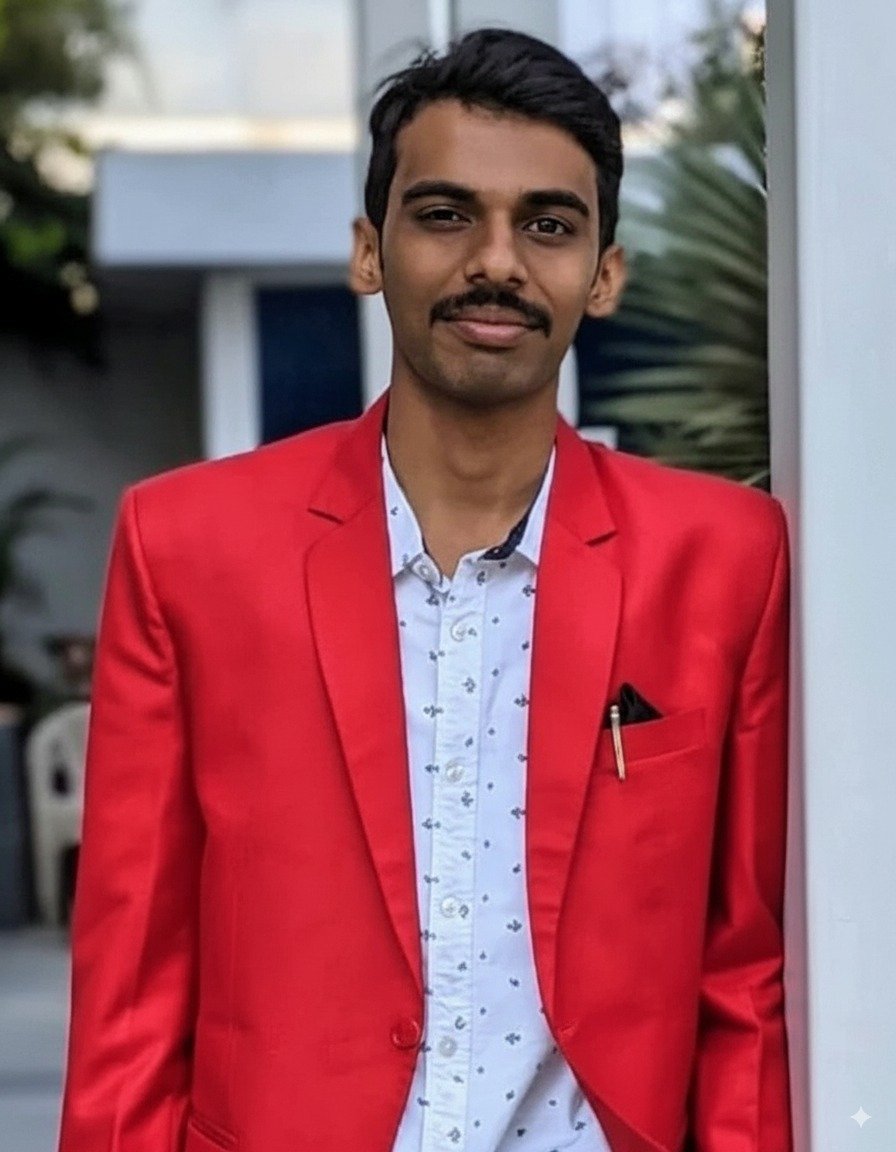
Affectionately known as “Blood Man,” Chetan’s journey reflects remarkable resilience, resourcefulness, and social purpose. Under his leadership, Khoon not only scaled rapidly but also played a pivotal role during the COVID‑19 pandemic, launching a 24/7 ambulance service to maintain lifesaving supply lines amid lockdowns. Honored with several prestigious awards, he is an Ashoka Youth Venturer, Rotary Vocational Awardee, and Champion of Change; Chetan seamlessly combines youthful optimism with effective leadership.
In this interview, we explore his inspiration, the evolution of Khoon, and the long-term impact of his mission—especially for aspiring social innovators and changemakers.
AED: Your journey with Khoon began with a deeply personal loss. How did that moment evolve into a mission to build a nationwide blood-donation network at such a young age?
Chethan: Back in 2015, I started Khoon out of a sense of helplessness, just to ensure that no one in my circle would have to struggle to find a blood donor like I once did. What began as a simple Google Form circulated among friends and neighbours, gradually grew into a nationwide network, thanks to the right support at the right time. I was fortunate to find mentors like Ms. Deepthi Bopaiah, early believers like Mr. Nilesh Kulkarni from Procam Group, and later, the support of Ashoka Innovators for the Public. With word of mouth and consistent efforts, we began receiving donor registrations from across the country. It started as a small act of problem-solving and grew into a movement.
AED: Many teenagers focus on exams and hobbies—what inner drive or influence pushed you to take on such a socially critical challenge at 16?
Chethan: Education is important, and it is natural and necessary for teenagers to focus on academics and hobbies. In fact, volunteering and social service can be a meaningful hobby too. For me, personal experience shaped everything. The urgency to fix something that was broken kept me going. Once I saw that a single blood unit could save a life, the mission became bigger than myself. That said, I do not think every 16-year-old needs to take on a cause. But they should be encouraged to explore empathy and action in ways that feel natural to them.
AED: What were the biggest roadblocks you faced while setting up Khoon, and how did you overcome them as a student with limited resources?
Chethan: Everything felt like a roadblock in the beginning. I was 16, and too young to be taken seriously. Blood banks would not return my calls. I had no team and no funds. But I kept showing up at colleges, at blood banks, again and again. Slowly, trust was built. Volunteers joined. Donors responded. Every no eventually turned into a let’s try. I am especially grateful to Deeksha Surana PU College in Kengeri for letting me organize our first blood donation camp. That one opportunity created momentum.
AED: How did your work with Khoon change your understanding of community service, health infrastructure, or leadership?
Chethan: Khoon made me realize that community service is not charity, it is about systemic change. Health infrastructure goes beyond hospitals, it is about trust, awareness, and accessibility. Leadership, I have learned, is about consistency, about showing up even when it is inconvenient or emotionally draining. I have failed many times, and those failures became my greatest teachers. This journey also led me to pursue a Master’s in Development Practice at CTARA, IIT Bombay, which helped me understand the broader context of social impact in healthcare.
AED: You’ve been recognized by Ashoka, TEDx, and more. How have these platforms amplified your mission—and what do they still not see about the reality of social innovation at the grassroots level?
Chethan: These platforms gave us credibility and access when we needed it most. When Khoon started in 2015, I did not even know what entrepreneurship meant. These recognitions helped shape both me and the organization. But what they often miss, especially in healthcare, is the emotional toll. Working with patients every day and then hearing that someone you were trying to help did not survive is hollowing. Volunteers also face this emotional burnout. I believe incubators and support programs must begin addressing this mental strain as part of their design.
AED: Has working with blood donation changed your views on how youth can contribute to public health in India?
Chethan: Absolutely. Young people are not just the future; they are a powerful part of the present. I have seen 18-year-olds run blood drives and health camps with more efficiency and empathy than institutions. What they need is trust, training, and fewer bureaucratic hurdles. Public health must become a participatory movement, and youth are often its boldest drivers.
AED: How do you balance academic life with the emotional and logistical demands of running a socially impactful initiative?
Chethan: Balance, in my experience, is more like organized chaos. I would finish class and jump on 50 donor coordination calls, or write papers late at night after a drive. What helped me survive was self-awareness, knowing when to slow down, when to delegate, and when to seek help. It was not always balanced, but it was driven by purpose, and that kept me going. Additionally volunteers and friends who trusted a 16-year-old and took up the organization’s work helped me focus on my education as well. Today, one of them is also my partner in running the organization, from a volunteer to a Partner.
AED: What role did technology play in scaling Khoon’s reach? Would you consider yourself a social tech innovator?
Chethan: Technology was critical. We built donor databases, automated alerts, and used WhatsApp bots before they were mainstream. But tech was always a means, not the end. I do not call myself a tech innovator, I see myself as a problem-solver. Sometimes, innovation is as simple as getting the right donor to the right patient just in time.
AED: If you could redesign India’s school curriculum to better foster changemakers, what would you include?
Chethan: I would introduce emotional intelligence, systems thinking, and real-world exposure. We teach kids to memorize, but not to act or question. Students should run local campaigns, shadow nurses, understand sanitation systems, and get their hands dirty. Personally, a school program called Bala Janagraha deeply influenced me. It gave me a platform to work on a real civic issue and probably sowed the earliest seeds of changemaking in me.
AED: What’s next for Khoon and for you personally—do you see yourself as a future policymaker, healthcare entrepreneur, or something entirely different?
Chethan: Khoon is evolving from just connecting donors to transforming how we respond to emergencies, build trust, and use data to improve public health. Personally, I see myself working at the intersection of policy, technology, and healthcare systems. I do not have a fixed title in mind, whether entrepreneur, policymaker, or something else. But I know the problem I want to solve, making India’s healthcare more humane, more accessible, and more accountable.