

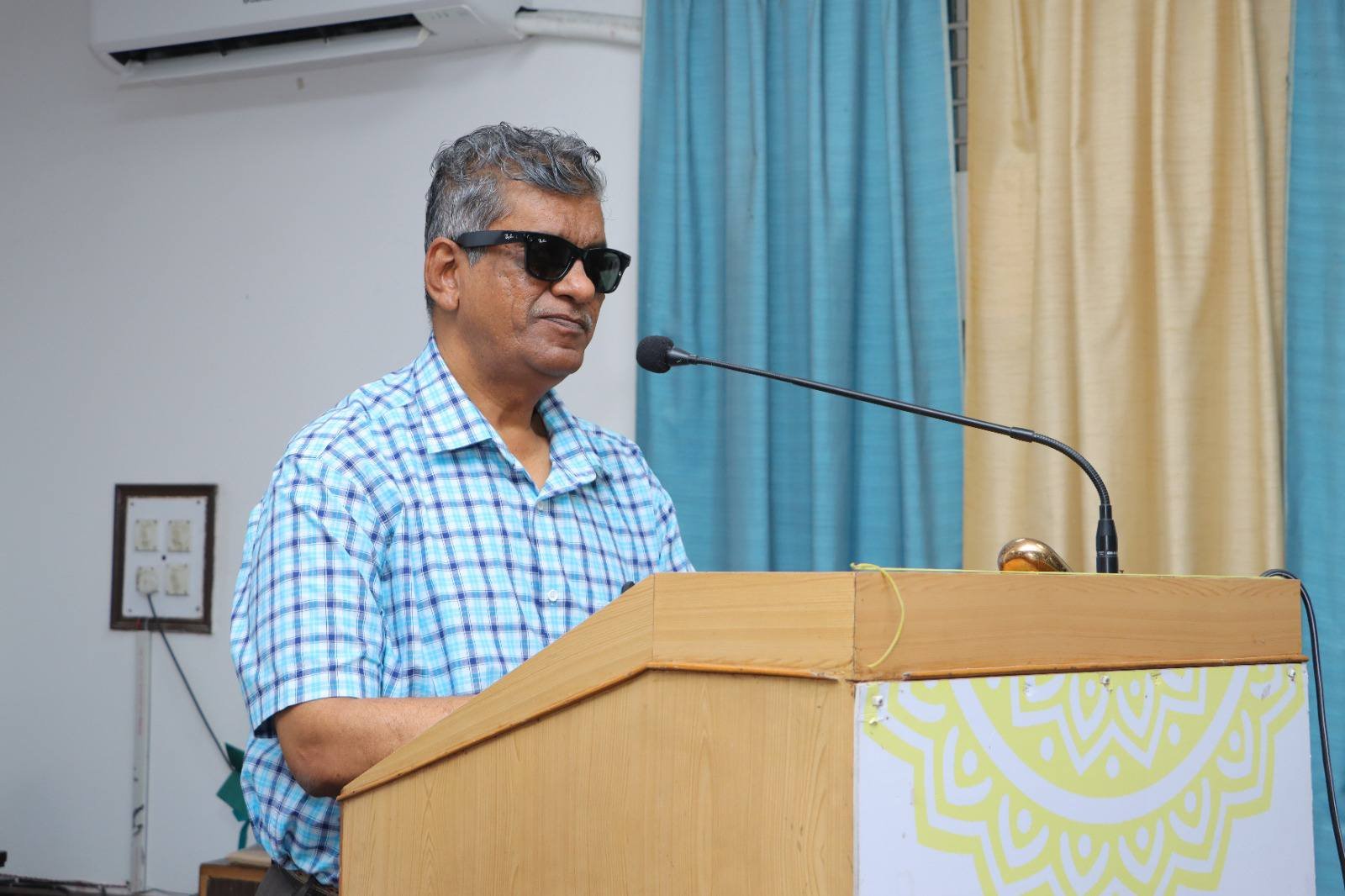
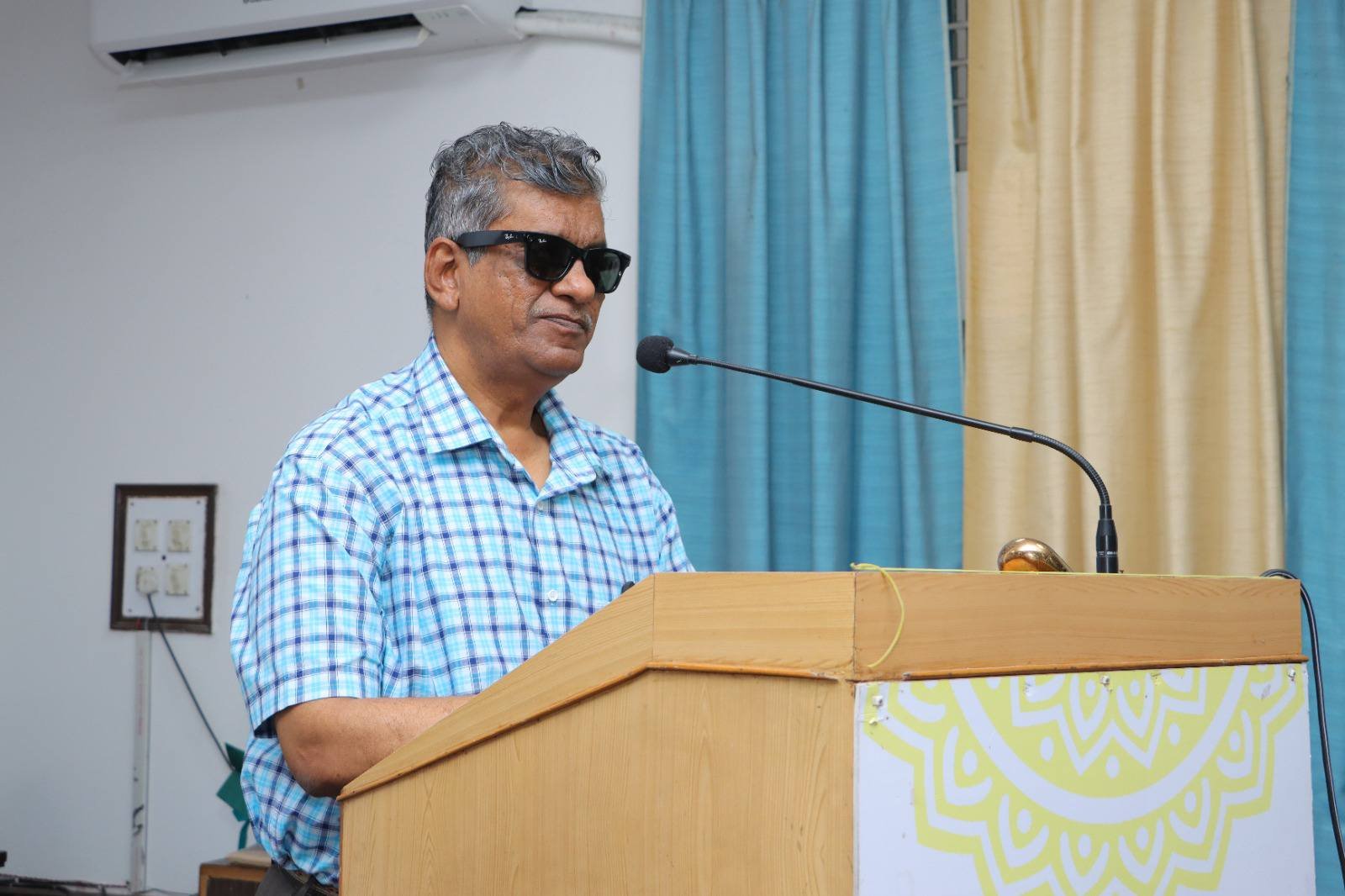
Q. Your personal story is one of courage and perseverance. How did your early experience with visual impairment shape your outlook on life and your decision to dedicate your career to education?
A: My life’s journey began with the constant challenge of glaucoma and the steady deterioration of my eyesight. My early years were a turbulent mix of attending a regular school and undergoing numerous surgeries at AIIMS. The definitive turning point came when doctors advised a special school, leading me to the Bihala Blind School in Kolkata at age six, where I learned Braille and, more importantly, adaptation and resilience. This resilience was continually tested through multiple school and city transfers, culminating in nine years of hostel life at the JPM Senior Secondary School for the Blind in Delhi. My early education was defined by severe scarcity: books in Braille or audio were nearly nonexistent, which forced an absolute dependence on classroom instruction that intensified in the university setting due to the total lack of accessible formats. This environment demanded resourcefulness and perseverance. My outlook was initially shaped “not by choice but by compulsion.” Success required a painful choice, forcing me to give up my interest in science and math to study Humanities due to the limited disciplines available for the visually impaired. Given the extremely limited employment landscape, teaching became the most viable path. It was through this initial compulsion, however, that I discovered a deep well of inner strength, driving me to academic excellence, consistently maintaining a top position, scoring a merit position in the CBSE 12th board exams, and achieving a first division in my Master’s in English Literature from Lucknow University, followed by the prestigious JRF and Research Associateship (RA) from UGC for my Ph.D. and post-doctoral research. Today, that ‘compelled’ choice is my most fulfilling one; my early struggles endowed me with profound empathy, discipline, and a deep appreciation for accessible learning, which now fuel my commitment to serving as an educator and mentor.
Q. What inspired you to establish RSVI, and what were some of the biggest challenges you faced in turning this vision into a movement for empowerment?
A: My inspiration to establish RSVI stemmed from a professional conviction that my vision for the education, training, and rehabilitation of the blind was not being fully realized within existing organizations. As a project development officer for various state and national NGOs, I recognized a critical, unmet need that demanded a dedicated effort. My primary objective was to bridge the crucial gap in accessible study material by converting “every possible printed paper” into accessible formats, including quality digital audiobooks, Braille, and E-Pubs, covering academic, fiction, and competitive exam books. The overarching vision was to create an inclusive society where blind individuals are empowered to “hold the torch and be a guiding beam for everybody in the society,” which led to the motto “Let The Blind Hold The Torch.” Turning this vision into a movement faced significant hurdles: organizing a consistent and committed team of dedicated volunteers for the laborious text conversion work; securing necessary funds to scale operations; navigating limited government support, which forced a heavy reliance on private efforts; and overcoming the most profound challenges—the general social environment’s lack of empathy and prevalent general attitude of society towards persons with disabilities. The entire journey was a struggle against both resource scarcity and pervasive societal apathy.
Q. As a founding member of the DAISY Forum of India, you’ve been instrumental in advancing accessible education. How has DAISY technology transformed learning opportunities for visually impaired students across India?
A: DAISY (Digital Accessible Information System) technology has been a fundamental game-changer, transforming learning opportunities by providing an efficient, navigable, and independent way to access educational content. Before DAISY, students were limited by conventional audio tapes or un-indexed digital texts. DAISY’s primary transformation lies in turning static information into a dynamic, navigable digital talking book. Based on MP3 and XML formats, it allows students to search, place bookmarks, and precisely navigate by chapter, section, heading, or even sentence, which is crucial for studying complex textbooks. The format synchronizes a human-recorded or synthetic voice with electronic text, allowing students with low vision to read along with highlighting for better comprehension. It also supports multi-format output like Braille via Refreshable Braille Display and adjustable large-print text. DAISY has been crucial in bridging the content gap in Indian languages. The collaborative effort led to the establishment of Sugamya Pustakalaya, a national accessible online library offering the largest collection of DAISY books, e-books, and Braille content. Furthermore, DAISY has been integrated into national digital education schemes like PM e-Vidya and the DIKSHA platform, with NCERT textbooks increasingly converted to the format for grades 1 to 12. For the first time, students can access complex content like Science and Mathematics. The technology fosters greater independence by allowing students to regulate the speaking speed without pitch distortion, making self-study a practical reality and significantly reducing their reliance on sighted volunteers. By using DAISY players and navigating structured digital files, students naturally develop digital literacy, which is essential for higher education and employment.
Q. Technology can be both a bridge and a barrier. How do you see the role of emerging technologies—like smartphones, screen readers, and AI—in empowering the visually impaired while maintaining creativity and critical thinking?
A: Emerging technologies have broken down historic barriers, offering unprecedented independence and access. Technologies built into smartphones and computers have transformed the lives of the visually impaired. Screen readers, tablets, and computers provide equal access to information, turning the digital world into a navigable space, which levels the playing field for education and employment. Daily independence is revolutionized by apps for object recognition, currency readers, and GPS navigation. This digital technology acts as a foundation for creativity: by automating or simplifying routine tasks like reading, it frees up cognitive resources for analyzing text, crafting narratives, or composing music. AI-powered apps (like Be My Eyes’ Be My AI and Seeing AI) and large language models provide scene and image description in real-time, offering context for critical analysis, and the information synthesis capabilities of AI aid research and problem-solving, acting as a powerful cognitive assistant. AI also assists in content creation, removing tedious barriers to creative output, enabling individuals with disabilities to perform as powerfully as their non-disabled counterparts. The risk, however, lies in over-reliance on technology. When AI provides a quick answer, the user might be tempted to accept it without deep engagement, which can lead to “cognitive offloading” and atrophy the critical thinking muscle. Similarly, constant reliance on auditory navigation might reduce the development of one’s own spatial reasoning and mental mapping skills. If creative tasks become over-reliant on AI generation, the output may lack the unique perspective, lived experience, and genuine originality that defines true creativity. The key is to ensure technology, together with AI, is used as a tool for inquiry, exploration, and empowerment, not as a shortcut. The next frontier is ensuring this technological empowerment is paired with an educational framework that actively cultivates critical thinking and unique human creativity.
Q. You’ve worked extensively with students through RSVI and National PG College. What are some of the key skills or mindsets that you believe can make visually impaired learners self-reliant and confident?
A: Self-reliance for visually impaired learners is built on a specific set of practical skills and a resilient psychological mindset, which together transform dependence into confident independence. The concrete abilities that allow a student to navigate their academic, professional, and personal lives independently and usefully include: Mastery of Assistive Technology (AT), which is the foundation of modern independence. This means achieving expert proficiency in Screen Readers (JAWS/NVDA/VoiceOver) for navigating complex digital content and in Digital Content Creation (using accessible word processors, spreadsheets, and presentation software), which has generated vast employment opportunities for my students. Orientation and Mobility (O&M) involves more than just using a white cane; it is the ability to develop strong mental maps of environments using all non-visual cues, which is directly tied to personal safety and self-assuredness. Lastly, Effective Communication and Advocacy is vital, where students are made capable of clearly articulating their needs and accommodation requirements to professors and employers, advocating for their rights without demanding special favors. On the psychological side, true confidence stems from a powerful internal shift in perspective, particularly Resilience and Emotional Fortitude. This is the ability to absorb setbacks, such as discrimination or technology failures, and recover without letting it define their identity, recognizing that difficulties are an inherent part of the human experience. By focusing on cultivating these practical skills and reinforcing this resilient mindset, visually impaired learners are truly empowered to become self-reliant, confident, and successful contributors to society.
Q. Your programs include innovative activities like audio-described movies, blind football, and quilling workshops. How do such creative initiatives contribute to the holistic development of your students?
A: Creative initiatives like sports for the blind, access to movies via audio-described projects, and vocational skills workshops are essential because they contribute to the holistic development of students by fostering crucial skills and experiences that extend far beyond traditional academics. They specifically focus on enhancing areas often limited by visual impairment: sensory engagement, social-emotional well-being, and non-visual creativity. These activities are alternative pathways for learning and expression: Quilling Workshops, which involve manipulating thin strips of paper, refine fine motor skills and tactile discrimination, encouraging students (especially the elderly blind) to conceptualize and create complex non-visual designs, thus nurturing creativity and abstract thinking. Audio-Described Movies actively develop listening skills and critical thinking. The student must rapidly synthesize spoken dialogue, sound effects, and the audio description to construct a complete mental image, enriching their descriptive vocabulary and narrative comprehension. Activities like Blind Football are vital for physical health and independence, serving as a powerful tool for developing spatial awareness, balance, and proprioception (the sense of body position). It trains students to rely on auditory cues for orientation and mobility, instilling physical confidence and a sense of mastery over their physical environment. In essence, these programs move beyond simply compensating for vision loss; they actively focus on asset-building, nurturing the whole student to be confident, physically capable, socially connected, and creatively expressive, ensuring a high degree of independence and quality of life.
Q. Despite progress, social perceptions around disability often lag behind. What changes do you believe are needed in mainstream education and employment to ensure genuine inclusion?
A: The key to bringing about social change in attitudes towards persons with disabilities lies not only in showcasing their accomplishments but in changing the mindset of non-disabled persons regarding social inclusion. This requires instilling a sense of human rights and teaching people to simply respect humanity with all its weaknesses. Moral education in schools should not be confined to teaching ethical values but must actively include the fact that ignoring or denying the rights of equality and inclusion of persons with disability is wrong. While the sense of right and wrong may vary across cultures, the inclusion and respect for persons with disabilities remains unaltered universally. Genuine inclusion for the visually impaired requires a fundamental shift in both perceptions (Mindset) and systems (Structure) within mainstream education and employment. Technological progress must be matched by social and structural change to ensure this genuine inclusion.
Q. What role can educational institutions, government bodies, and NGOs play together to scale models like RSVI and DAISY nationwide?
A: The successful, nationwide scaling of models like RSVI and DAISY requires a structured partnership—a “Triple Helix” of collaboration—where each sector plays an essential role. The primary role that individuals and NGOs like RSVI can play is to have a positive advocacy push in the government and to create awareness among policymakers. The government’s role is to provide the mandate, the infrastructure, and the funding to move from localized charity to systemic right. This involves passing and rigorously enforcing laws that Mandate Accessibility in all public educational institutions and government services, and Allocating Targeted Funding for procuring and distributing essential Assistive Technology (AT) and for continuous teacher training on AT and inclusive pedagogy. Educational institutions are the point of delivery and the engine for creating skilled individuals. Their role is Capacity Building, which means establishing specialized Accessible Technology Resource Centers within universities and teacher-training colleges to train both future educators and visually impaired students to achieve expert-level AT proficiency (like the RSVI model). They must also Promote Non-Visual Skills by integrating the RSVI model’s focus on holistic development (mobility, sports, non-visual creative arts) into the extracurricular life to normalize inclusion. Finally, NGOs serve as the voice of the community, responsible for Advocacy and Accountability by auditing government and institutional performance and ensuring inclusion policies are rooted in the lived experiences of visually impaired individuals. The combined force of government funding and mandate, institutional implementation and training, and NGO innovation and expertise is the only way to effectively and sustainably scale these successful models nationwide.
Q. You once said, “We may not see the world, but we can illuminate it for others.” What keeps you motivated during difficult times, and how do you nurture optimism in your students?
A: That sentiment, “We may not see the world, but we can illuminate it for others,” is the core of our work; it suggests our purpose is defined by the unique value and insight we bring, not by our limitations. My personal motivation during challenging periods comes from two main sources: the power of human potential and the mandate of responsibility. What keeps me going is seeing the direct, measurable impact of our programs—the transformation of a dependent student into a confident, qualified professional. This is the realization that Ability is Constant; Access is the Variable. Our difficulties are just a temporary lack of the right tools (like the DAISY file or screen reader mastery), and solving that problem reaffirms that potential is limitless. As a leader, my motivation is intrinsically tied to the need to be the most resilient example for the community I serve. We nurture optimism not through hollow assurances, but through demonstrable success. We break down large goals into achievable technical steps, focusing relentlessly on Mastery Over Tools. When a student fully masters their assistive technology, they stop seeing it as a crutch and start seeing it as a superpower, creating a concrete, skills-based confidence. We combat isolation by fostering a culture of Peer Mentorship, actively pairing seniors with new students. When a newcomer sees a successful role model who has overcome the exact same struggles, it transforms optimism from a hope into a blueprint. Ultimately, true optimism is not the absence of difficulty, but the unwavering belief that the resources, skills, and community needed to overcome any difficulty are already within reach. My two guiding beacons that help me illuminate my path to serve the community are “One step at a time” and “Nothing about us without us.”
Q. What message would you like to share with readers, especially young people, about overcoming limitations and turning challenges into purpose?
A: My message to readers, especially young people, is to make choices based on the infinite power of changing the attitude of the society towards persons with disabilities. Young people should not be defined by their limitations but by their accomplishments and capabilities to learn. Your mindset should focus on “weaknesses are your strength.” Limitations are simply facts, not forecasts; they define a boundary in one area, but they do not dictate the vast potential in all others. You should never be satisfied with what you have, but you should always crave for what you actually should have. Discrimination and ignorance should not affect your potential negatively. You must become the bridge between the world as it is and the world as it should be. That is why my motto for RSVI has been “Let the blind hold the torch” and illuminate the dark labyrinths of ignorance.
Dr. Rakesh Jain’s life reminds us that true vision is not defined by sight but by insight — the ability to turn personal challenges into collective change. Through his work with RSVI and the DAISY Forum of India, he has not only created pathways for accessible education but also reshaped how society perceives ability, inclusion, and purpose. His story is a profound testament to the human spirit’s capacity to adapt, innovate, and uplift others even in the face of adversity.
As he continues to mentor and inspire, his message resonates deeply: “When the blind hold the torch, the whole world finds its way.”